
 |
| A couple things on my workbench at home one day. OEM R32 fuel tank top. Flex fuel sensor. BAS alternator/motor |
My wife worked at GM, and she worked on/around the GM BAS system. It’s pretty basic. It’s pretty mild. It was a stop gap type of thing. The part that interested me the most, was that the footprint of the BAS was about the same size as a conventional alternator. That got me thinking.
 |
| RB26 alternator on the left, BAS on the right |
 |
| RB26 alternator in the background, BAS in the foreground |
The RB26 is a small displacement, short stroke engine. It doesn’t make a lot of bottom end. It just doesn’t. You don’t get a ton of torque down low, out of an engine with a 73.7 mm stroke, and a 121.5 mm C-C rod. So, could you take a BAS, add it as an assist to an RB, and have it work from say idle to maybe 3000 rpm or so? Standing on it coming out of a corner, make up for some of that “Turbolag?” Maybe you could even use it a little at cruise? It doesn’t take much horsepower for a car to cruise at a steady speed on the freeway. Maybe it might help improve fuel economy, maybe emissions. Emissions may not be on your mind, but with California regulations, and an engine that never was made for them, it’s always on my mind.
These early BAS :
in the 2007 Saturn Vue Green Line. The BAS system is also used in the 2008–2009 Chevrolet Malibu Hybrid. It operates similarly to other mild hybrids with a start-stop system, in that it shuts down the engine as the vehicle comes to a stop and instantly restarts it when the brake pedal is released.[1]
The BAS system is capable of providing modest levels of power assist during launch/acceleration and similarly modest levels of “blended” regenerative braking during deceleration. Although unable to operate in pure all-electric EV mode, the BAS system provides improvements to both city and highway fuel efficiency over similar non-hybrid versions. In more powerful eAssist versions, a BAS system can add power to prevent excessive gear changes under variable load. According to the EPA the 2009 Saturn Vue BAS hybrid garners an improvement of 32% city (19>25mpg) and 24% highway (26>32mpg) making the combined economy improvement 27% (22>28mpg) over the base 4cyl FWD version.[2] The system is reasonably simple and inexpensive, making BAS equipped vehicles some of the least expensive hybrids available.[3][4][5]
A 36 volt electrical system (operating at 42–45 Volts) is used to operate a permanent magnet motor/generator unit mounted to the engine in a similar fashion to a conventional alternator. Then through a high-tension drive belt, the BAS system is capable of starting or assisting the 2.4L Ecotec engine. A conventional 12V starter motor is retained and used whenever the engine is cold as during initial start-up. The air conditioning compressor continues to be operated through a belt-driven pulley, but for fuel economy improvement it can be disabled in auto-stop mode if the “ECO” A/C mode has been selected by the operator.
Vehicles with the BAS system use a conventional 4T45-E automatic transmission which has been modified to include a more efficient final-drive ratio and includes an electrically driven pump to provide pressure in auto-stop mode.
One perceived benefit of the BAS technology is that it fits in the same space as a conventional engine. No significant modifications were required to the vehicle chassis to accommodate the BAS system, with the 36V battery pack housed in the trunk or spare tire well. This allows the vehicles to be produced on the same assembly line as the non-hybrid versions, producing substantial cost savings and allowing the company to adjust production more easily.
 |
| The green line being the early BAS system. 36v run at 42-45 volts |
- About $250-$300 used on eBay
- About $270 on eBay


 |
| GM BAS connector on the controller. Need to start looking at pin outs |
 |
| GM BAS connector on the controller. Need to start looking at pin outs |
Converting a Car Alternator into a Go Kart Motor:
Hall Effect Sensor Placement Article:
Follow Me:
Instagram:
 |
| Honda Clarity Battery |
 |
| I know what this does. + battery voltage |
 |
| What do these pins do? Two wire is almost always something basic like a switch or sensor. |
 |
| What do all these pins do? |
 |
| GM BAS connector on the controller. Need to start looking at pin outs |
 |
| GM BAS connector on the controller. Need to start looking at pin outs |
 |
| GM BAS connector on the controller. Need to start looking at pin outs |

Now retrieving an image set.
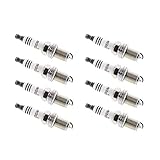
NGK Iridium IX Spark Plug LFR5AIX-11 (8 Pack) for NISSAN TITAN SE 2004-2008 5.6L/5552cc
(as of July 14, 2026 05:22 GMT +00:00 – More infoProduct prices and availability are accurate as of the date/time indicated and are subject to change. Any price and availability information displayed on [relevant Amazon Site(s), as applicable] at the time of purchase will apply to the purchase of this product.)



OYEAUTO 93501 Iridium Spark Plugs LKAR7BIX11S 6 Pack Compatible with Nissan 370Z Maxima Murano Pathfinder Quest GT-R Altima 2001-2024 & Infiniti G37 QX60 Q60 2008-2024 & Acura MDX TLX 2017-2024 V6
(as of August 25, 2026 10:17 GMT +00:00 – More infoProduct prices and availability are accurate as of the date/time indicated and are subject to change. Any price and availability information displayed on [relevant Amazon Site(s), as applicable] at the time of purchase will apply to the purchase of this product.)


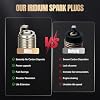
SYKRSS 6240 Iridium Spark Plugs 8 Pack Compatible with Nissan Armada Titan Pathfinder Armada 2004-2006 Compatible with INFINITI QX56 M45 FX45 Q45 2002-2010 4.5L 5.6L V8 Engine for PLFR5A-11 Spark Plug
(as of August 25, 2026 08:46 GMT +00:00 – More infoProduct prices and availability are accurate as of the date/time indicated and are subject to change. Any price and availability information displayed on [relevant Amazon Site(s), as applicable] at the time of purchase will apply to the purchase of this product.)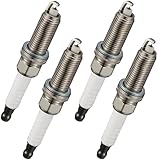


BDFHYK LKAR6AIX-11 Iridium Spark Plugs Compatible with Chevy for Nissan 2007-2013 Altima 2008-2013 Rogue 2007-2012 Sentra 2013-2021 NV200 1.6L 1.8L 2.0L 2.5L L4 Engine Replacement for XP5684, Set of 4
(as of August 25, 2026 08:46 GMT +00:00 – More infoProduct prices and availability are accurate as of the date/time indicated and are subject to change. Any price and availability information displayed on [relevant Amazon Site(s), as applicable] at the time of purchase will apply to the purchase of this product.)![[Vehicle Fitment-1]: This automotive replacement spark plugs Compatible with INFINITI 2009 2010 2011 2012 2013 FX50 V8 5.0L, 2011 2012 2013 M56 V8 5.6L, 2014 2015 2016 2017 2018 2019 Q70 V8 5.6L, 2015 2016 2017 2018 2019 Q70L V8 5.6L, 2011 2012 2013 ...](https://m.media-amazon.com/images/I/51a4vf0j0NL._SL160_.jpg)


Iridium Spark Plugs 8 Pack 93501 LKAR7BIX-11S Compatible with Nissan Armada NV2500 NV3500 TITAN INFINITI FX50 M56 Q70 Q70L QX56 QX70 QX80 V8 5.0L / 5.6L
(as of August 25, 2026 09:18 GMT +00:00 – More infoProduct prices and availability are accurate as of the date/time indicated and are subject to change. Any price and availability information displayed on [relevant Amazon Site(s), as applicable] at the time of purchase will apply to the purchase of this product.)



BDFHYK 93501 Iridium Spark Plugs Compatible with Nissan TITAN Altima Armada NV2500 NV3500, Compatible with INFINITI QX56 QX60 QX80 M56,CX-3 Replacement for LKAR7BIX11S Set of 8
(as of August 25, 2026 09:18 GMT +00:00 – More infoProduct prices and availability are accurate as of the date/time indicated and are subject to change. Any price and availability information displayed on [relevant Amazon Site(s), as applicable] at the time of purchase will apply to the purchase of this product.)
Leave a Reply